
For many years, investors focused mainly on growing their wealth through stocks, mutual funds, ETFs, and bonds held inside Demat accounts. But very few people paid serious attention to what would happen to these investments after the account holder’s death. Families often faced legal confusion, delayed transfers, court disputes, and lengthy paperwork while trying to claim financial assets. In many cases, even when a nominee was added, disagreements between legal heirs created additional complications. This is why the discussion around the Nominee Succession Act of 2026 has become important in the Indian financial system. The new framework aims to simplify succession rules, strengthen nominee rights, and reduce disputes related to Demat accounts and other financial assets. As digital investing grows rapidly across India, understanding nomination and succession laws is becoming just as important as understanding investing itself.

What Is a Demat Account?
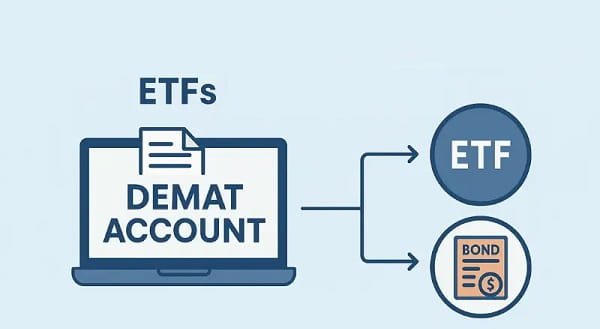
A Demat account, or Dematerialized account, is used to hold securities electronically.
It stores:
- Shares
- Bonds
- ETFs
- Mutual funds
- Government securities
- Debentures
Today, almost every stock market investor in India requires a Demat account for buying and selling securities.
These accounts are maintained through depositories like:
- NSDL
- CDSL
along with registered brokers and Depository Participants (DPs).
Why Nomination Matters in a Demat Account
A nominee is the person authorized to receive the assets in a Demat account if the account holder dies.
Without nomination, family members may face:
- Legal delays
- Succession certificate requirements
- Court procedures
- Documentation disputes
- Asset transfer complications
For large portfolios, these issues can become stressful and time-consuming.
Nomination acts as a protective mechanism to make asset transfer smoother.
Understanding the Nominee Succession Act of 2026
The Nominee Succession Act of 2026 is being discussed as part of broader financial succession reforms aimed at reducing legal confusion in asset transmission.
The main purpose of the framework is to:
- Clarify nominee rights
- Speed up transmission of financial assets
- Reduce disputes among heirs
- Improve digital succession systems
- Protect investors’ families
One of the biggest debates in Indian financial law has always been this question:
“Does the nominee become the final owner, or only a trustee for legal heirs?”
Different court rulings over the years created confusion across banking, insurance, and securities sectors.
The 2026 framework aims to create greater clarity.
How Demat Account Transmission Works
When an account holder dies, securities are transferred through a process called transmission.
This is different from a normal transfer because ownership changes due to death rather than sale.
If a Nominee Exists
The process is usually simpler.
The nominee submits:
- Death certificate
- KYC documents
- Transmission request form
- Identity proof
After verification, the securities may be transferred to the nominee’s account.
If No Nominee Exists
The process becomes more complicated.
Legal heirs may need:
- Succession certificate
- Probate of will
- Legal heir certificate
- Indemnity documents
This can significantly delay access to investments.
Key Changes Expected Under the 2026 Framework
Greater Legal Clarity
The framework seeks to reduce confusion between nominee rights and inheritance laws.
Faster Digital Transmission
Digital verification systems may help speed up asset transfers.
Reduced Court Dependency
Smaller claims may avoid lengthy court procedures.
Stronger Investor Protection
Families may receive quicker access to financial assets during emergencies.
Unified Rules Across Financial Assets
Efforts are being discussed to create more consistency between:
- Demat accounts
- Bank accounts
- Insurance policies
- Mutual funds
Importance of Updating Nominees
Many investors add nominees once and forget about them forever.
But life situations change over time:
- Marriage
- Divorce
- Death of nominee
- Family disputes
- Children becoming adults
An outdated nominee can create major complications later.
Investors should regularly review nomination details in their Demat accounts.
Joint Holding vs Nomination
Some investors confuse joint holders with nominees.
They are different.
Joint Holder
A joint holder is an actual co-owner of the account.
Nominee
A nominee receives the assets after the account holder’s death.
Joint holding may sometimes simplify succession further, especially for spouses and family investments.
Common Mistakes Investors Make
Ignoring Nomination Completely
Many Demat accounts still have no nominee registered.
Adding Minor Nominees Without Guardian Details
This can create complications during claims.
Not Updating Nominee Information
Old records may become invalid or disputed.
Assuming Family Automatically Gets Access
Without proper documentation, even close family members may face delays.
Keeping Investments Unknown to Family
In many cases, heirs do not even know the existence of Demat accounts.
Why This Topic Is Becoming More Important
India has seen massive growth in retail investing in recent years.
Millions of first-time investors now hold:
- Stocks
- SIPs
- ETFs
- Digital assets
As household participation in financial markets increases, succession planning becomes essential.
Financial literacy today is no longer only about investing wisely. It is also about ensuring smooth transfer of wealth to the next generation.
Role of Technology in Succession Management
The 2026 reforms are also expected to encourage more digital succession systems.
This may include:
- Online nominee updates
- Digital transmission requests
- Centralized verification
- Faster claim processing
Technology can significantly reduce paperwork and improve transparency.
Final Thoughts
A Demat account is not only an investment tool. It is also part of a person’s financial legacy.
While investors spend years building wealth, many still ignore succession planning and nominee management. This often creates unnecessary legal and emotional stress for families later.
The Nominee Succession Act of 2026 represents an important shift toward simplifying financial inheritance and reducing uncertainty around asset ownership after death.
For investors, the lesson is simple:
Building wealth is important.
But ensuring smooth transfer of that wealth is equally important.
FAQs
Q: What is a nominee in a Demat account?
A: A nominee is the person authorized to receive securities if the account holder dies.
Q: Is nomination mandatory for Demat accounts?
A: Regulators have increasingly pushed investors to add nominees, and many brokers now require nomination compliance.
Q: What happens if there is no nominee?
A: Legal heirs may need succession certificates or court documents to claim the assets.
Q: What is transmission in a Demat account?
A: Transmission is the process of transferring securities after the death of the account holder.
Q: Can a nominee become the legal owner?
A: This has historically created legal debates, and newer succession frameworks aim to provide clearer rules.
Q: Can nomination details be changed later?
A: Yes, investors can update or replace nominees anytime through their Depository Participant.
Q: Why is succession planning important for investors?
A: It helps families avoid delays, disputes, and legal complications while accessing financial assets.








Leave a Reply