
Most people associate Demat accounts with individual investors buying stocks or mutual funds. But businesses can also open Demat accounts for investing, treasury management, and holding securities digitally.
Today, many partnership firms and private limited companies use Demat accounts for:
- Investing surplus funds
- Trading in shares and bonds
- Holding mutual funds and ETFs
- Managing corporate investments
- Participating in IPOs
However, opening a Demat account for a business is slightly different from opening one for an individual. The documentation requirements, compliance checks, and operational rules are more detailed.
Understanding these differences is important for firms planning to invest through a corporate structure.

What Is a Demat Account?
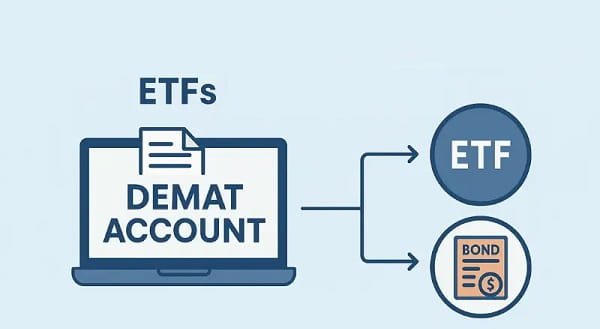
A Demat account, short for “Dematerialized Account,” is used to hold securities in electronic form.
It stores:
- Shares
- Bonds
- ETFs
- Government securities
- Mutual fund units
- Debentures
Just like individuals need a Demat account for stock market investing, companies and partnership firms also require one for holding investments digitally.
Can Partnership Firms Open a Demat Account?
Yes, partnership firms can open Demat accounts in the firm’s name.
The account is operated through authorized partners designated by the partnership firm.
This allows the business to invest using company funds rather than personal accounts of partners.
Common Reasons Partnership Firms Open Demat Accounts
- Investing surplus cash reserves
- Trading in stocks and derivatives
- Long-term wealth management
- Holding debt securities
- Diversifying business assets
However, the Demat account belongs to the firm, not individual partners.
Can Private Limited Companies Open a Demat Account?
Yes, private limited companies can also open corporate Demat accounts.
In fact, many companies actively use Demat accounts for treasury operations and strategic investments.
Corporate Demat accounts are commonly used for:
- Equity investments
- Buybacks and corporate actions
- Investment portfolios
- Employee stock-related transactions
- IPO applications
- Bond investments
The company acts as a separate legal entity, so the Demat account is opened in the company’s registered name.
Documents Required for Partnership Firm Demat Account
The exact requirements may vary slightly between brokers and depositories, but commonly required documents include:
Basic Documents
- PAN card of the partnership firm
- Partnership deed
- Registration certificate (if registered)
- Address proof of the firm
- Bank account proof
Partner Documents
- PAN and Aadhaar of partners
- Photographs
- KYC documents
Authorization Documents
- Resolution authorizing account opening
- List of authorized signatories
Some brokers may also request GST certificates or income tax documents for verification.
Documents Required for Private Limited Company Demat Account
Private limited companies generally face more compliance requirements.
Company Documents
- Certificate of Incorporation
- Memorandum of Association (MOA)
- Articles of Association (AOA)
- Company PAN card
- Registered office address proof
Director Documents
- PAN and Aadhaar of directors
- Photographs
- KYC documents
Corporate Authorization
- Board resolution approving Demat account opening
- Authorized signatory list
- Specimen signatures
Financial Documents
- Bank statements
- Cancelled cheque
- Income proof if required
Some brokers may also ask for shareholding patterns and GST details.
Corporate Demat Accounts vs Individual Demat Accounts
There are several differences between the two.
| Feature | Individual Account | Corporate Account |
| Ownership | Individual person | Firm or company |
| Documentation | Simple KYC | Extensive compliance |
| Operation | Self-operated | Through authorized persons |
| Compliance Level | Lower | Higher |
| Account Opening Time | Faster | Usually longer |
Corporate accounts generally involve stricter due diligence due to regulatory and compliance requirements.
Why Businesses Use Demat Accounts
Treasury Management
Companies often invest idle cash instead of leaving funds unused in bank accounts.
Long-Term Investment
Businesses may build investment portfolios for future expansion or stability.
Better Liquidity
Investments in listed securities can often be sold more easily compared to physical assets.
Digital Convenience
Demat accounts simplify holding and managing securities electronically.
Taxation Considerations
Tax treatment depends on:
- Type of entity
- Nature of investment
- Holding period
- Trading frequency
For example:
- Long-term capital gains
- Short-term capital gains
- Business income taxation
may apply differently for companies and firms.
Frequent trading activity may sometimes be treated as business income rather than capital gains.
Businesses should usually consult tax professionals before creating large investment portfolios.
Important Compliance Factors
Businesses operating Demat accounts must ensure:
- Proper accounting records
- Authorized transactions only
- Regulatory compliance
- Accurate reporting in financial statements
Private limited companies especially must maintain board approvals and proper documentation for major investment activities.
Failure to maintain compliance can create audit and legal complications.
Choosing the Right Broker for Corporate Accounts
For business entities, broker selection should not depend only on low brokerage.
Important factors include:
- Corporate account support
- Compliance handling
- Relationship management
- Platform stability
- Research tools
- Bulk transaction capability
Some discount brokers focus mainly on retail clients, while full-service brokers may provide better corporate support.
Common Challenges Businesses Face
Documentation Delays
Corporate KYC procedures can take longer than individual account opening.
Compliance Complexity
Additional paperwork and approvals are often required.
Operational Authorization
Clearly defining who can operate the account is important.
Regulatory Scrutiny
Large transactions may require additional verification.
Final Thoughts
Demat accounts are no longer limited to retail investors. Partnership firms and private limited companies increasingly use them as part of financial management and investment planning.
A corporate Demat account allows businesses to participate efficiently in capital markets while managing investments digitally.
However, opening and operating such accounts involves more documentation, compliance, and responsibility than individual accounts.
Businesses should focus not only on brokerage costs but also on proper governance, tax planning, and regulatory compliance.
When managed correctly, a corporate Demat account can become a valuable financial tool for long-term growth and treasury management.
FAQs
Q: Can a partnership firm open a Demat account?
A: Yes, partnership firms can open Demat accounts in the firm’s name through authorized partners.
Q: Can a private limited company invest in stocks?
A: Yes, private limited companies can legally invest in stocks, bonds, ETFs, and other securities through corporate Demat accounts.
Q: Is the documentation process different for companies?
A: Yes, companies and firms usually need more compliance documents compared to individual investors.
Q: Who operates a corporate Demat account?
A: Authorized signatories, directors, or partners approved by the entity operate the account.
Q: Can businesses apply for IPOs through Demat accounts?
A: Yes, corporate Demat accounts can be used for IPO applications and other market investments.
Q: Are taxes different for corporate Demat accounts?
A: Taxation may differ depending on entity type and investment activity. Professional tax advice is often recommended.
Q: Do all brokers offer corporate Demat accounts?
A: No. Some brokers mainly serve retail investors, while others provide specialized corporate account services.








Leave a Reply