
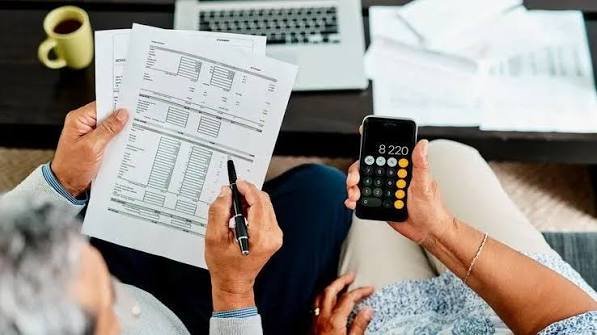
You wake up. Before coffee, before brushing your teeth, sometimes before fully opening your eyes — you check your portfolio. The number is up. You feel a quiet satisfaction. The number is down. Something tightens in your chest, and it follows you through the morning.
By evening you check again. Then once more before bed.
If this sounds familiar, you are not alone. And you are not undisciplined. You are simply experiencing a set of psychological forces that financial markets exploit with ruthless efficiency — and that smartphone apps have made available to you twenty-four hours a day.
The question worth asking is not whether your portfolio is performing well. It is whether the act of checking it constantly is making you a better investor — or a worse one.

What Frequent Checking Actually Does to Your Brain
Every time you open your portfolio app, your brain processes the number as a signal. Up means safety, progress, validation. Down means threat, loss, failure. This is not metaphorical — your brain’s threat-detection system, the amygdala, responds to financial loss with the same neurological alarm it uses for physical danger.
Here is the asymmetry that makes this particularly damaging: losses feel approximately twice as powerful as equivalent gains. This is loss aversion, documented extensively by psychologists Daniel Kahneman and Amos Tversky. A ₹10,000 drop produces roughly twice the emotional distress of a ₹10,000 gain producing pleasure.
Now combine this with daily market volatility. Even a healthy, well-performing portfolio will show red on roughly 40 to 45% of trading days over any given year. If you check your portfolio every day, you are subjecting yourself to a loss experience almost every other day — even if your long-term returns are excellent.
Check once a week and the proportion of negative experiences reduces. Check once a month and it shrinks further. Check once a quarter and almost every review, in a rising market, feels positive. The portfolio hasn’t changed. Only your perception of it has — and perception drives behaviour.
The Behaviour It Triggers
Frequent checking doesn’t stay passive for long. It creates an itch. And itches get scratched.
Panic selling. The most common and most costly consequence. Markets drop 4% in a week. You’ve watched it fall every day. By Friday, the accumulated emotional weight of five daily losses feels unbearable, and you redeem. Two weeks later, the market recovers. You’ve crystallised a loss and missed the bounce — the most expensive two-step in retail investing.
Overtrading. Every time you check and see a gain, there is a temptation to book profit — to lock in the win before it disappears. Every dip looks like a buying opportunity that must be acted on immediately. The result is a hyperactive portfolio generating transaction costs, short-term capital gains tax, and worse long-term performance than simply doing nothing.
Comparison paralysis. Portfolio apps increasingly show benchmark comparisons, peer fund performance, and trending stocks. Frequent checking means frequent exposure to the fund that returned 3% more than yours last month, the stock that tripled that you don’t own, the category your money isn’t in. This fuels regret, second-guessing, and portfolio churning — all documented destroyers of long-term returns.
Why Apps Are Designed for This
It is worth being clear-eyed about one thing: the design of most investment apps is not neutral. Notifications, colour-coded gains and losses, percentage changes in bold, trending tickers, and one-tap trading are not features built to improve your investment outcomes. They are engagement mechanisms built to increase time on platform.
More checking means more emotional reactivity. More emotional reactivity means more trading. More trading means more brokerage revenue. Your anxiety is, in a measurable sense, someone else’s business model.
What the Evidence Says About Checking Frequency
Research on investor behaviour consistently finds that less frequent portfolio monitoring leads to better long-term outcomes. Investors who reviewed their portfolios quarterly or annually made fewer impulsive decisions, maintained asset allocation more consistently, and ended up with meaningfully higher returns than those who checked daily — not because of better stock selection, but simply because of reduced interference.
The best investment decision most retail investors can make is not which fund to pick. It is how often to look.
A Practical Framework for Checking
Check your portfolio once a month for awareness. Conduct a meaningful review once a quarter — assess whether your SIPs are running, whether asset allocation has drifted significantly, and whether any fund has materially underperformed its benchmark for more than 12 months. Do a comprehensive annual review to rebalance, assess goal progress, and make intentional changes.
Everything else is noise consumption dressed up as diligence.
FAQs
Q1. Is there any benefit to checking your portfolio daily?
A: Almost none for a long-term investor. Daily checking provides emotional stimulation but no actionable information. Prices on any given day carry negligible signal about the quality of your long-term investment decisions.
Q2. How do I break the habit of compulsive portfolio checking?
A: Remove the portfolio app from your home screen. Turn off price alerts and daily summary notifications. Replace the checking habit with a scheduled monthly review date — treat it like a calendar appointment, not an impulse.
Q3. What if something genuinely important happens in the market? Won’t I miss it?
A: Truly significant market events — the kind that warrant a portfolio response — are impossible to miss. They dominate news cycles. Staying informed through news, not price feeds, gives you context without the emotional volatility of watching numbers move in real time.
Q4. Does this apply to SIP investors especially?
A: Yes, perhaps more so. SIP investors have already made the most important decision: automate regular investments regardless of market conditions. Checking the portfolio daily actively undermines this strategy by inviting the temptation to pause or stop SIPs during downturns — the worst possible time to do so.
Q5. Is there a term for the distress caused by frequent portfolio checking?
A: Behavioural economists sometimes refer to the compulsive monitoring of financial accounts as “myopic loss aversion” — a combination of loss aversion and an overly short evaluation period. It is one of the most well-documented and costly behavioural biases in retail investing.







Leave a Reply