
As ETF investing becomes more popular in India, many new investors spend a lot of time comparing brokers. They compare brokerage charges, app design, account opening speed, and trading features before opening a Demat account.
While these things matter, there is another factor that often affects ETF investors far more in the long run — liquidity.
Many people buy an ETF simply because it tracks a famous index or has low expense ratios. But later they discover a hidden problem. The ETF may not have enough buyers and sellers in the market.
This can lead to poor pricing, wide spreads, delayed execution, and lower returns than expected.
In ETF investing, choosing the right ETF with strong liquidity is often more important than choosing between brokers.
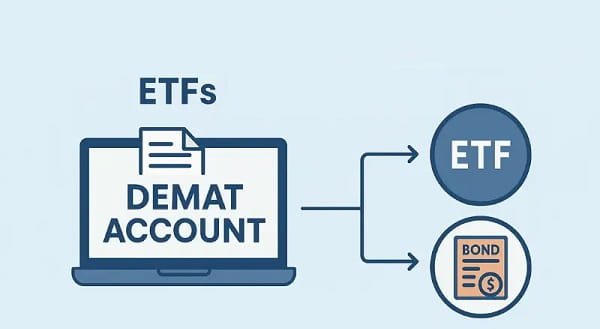
What Is an ETF?
An Exchange Traded Fund (ETF) is an investment fund traded on stock exchanges like a normal stock.
ETFs usually track:
- Stock market indices
- Gold prices
- Government bonds
- International markets
- Sector-based themes
For example:
- Nifty 50 ETFs
- Gold ETFs
- Banking ETFs
- US market ETFs
To invest in ETFs, investors need:
- A Demat account
- A trading account
This is why brokers become part of the ETF investing process.
Why Many Investors Focus Too Much on Brokers
New investors often think:
- “Which broker has zero brokerage?”
- “Which app looks modern?”
- “Which platform has faster execution?”
These are valid questions.
But for long-term ETF investing, the broker usually has less impact than the ETF itself.
If an ETF lacks liquidity, even the best broker cannot fix the pricing problem.
What Is Liquidity in ETFs?
Liquidity simply means how easily an ETF can be bought or sold without affecting its price too much.
An ETF with high liquidity has:
- Large daily trading volume
- Many buyers and sellers
- Small bid-ask spreads
- Smooth execution
An ETF with poor liquidity may have:
- Low trading activity
- Large price gaps
- Difficulty selling quickly
- Unfavorable pricing
Liquidity directly affects the actual return investors receive.
Understanding Bid-Ask Spread
This is one of the most important concepts in ETF investing.
Every ETF has:
- Bid Price → Highest price a buyer is willing to pay
- Ask Price → Lowest price a seller wants
The difference is called the spread.
Example
Suppose:
- Bid price = ₹100
- Ask price = ₹101
Spread = ₹1
That ₹1 difference is effectively a hidden cost.
Highly liquid ETFs usually have very tight spreads.
Illiquid ETFs may have surprisingly large spreads that quietly reduce investor profits.
Why Liquidity Matters More Than Brokerage
Imagine two situations:
Investor A
- Uses a slightly expensive broker
- Invests in a highly liquid ETF
Investor B
- Uses a zero-brokerage platform
- Invests in an illiquid ETF with wide spreads
Investor B may actually lose more money through poor execution than Investor A pays in brokerage.
This is why experienced ETF investors often focus more on:
- Trading volume
- AUM (Assets Under Management)
- Spread quality
- Market depth
rather than only brokerage costs.
Low Liquidity Can Create Tracking Problems
An ETF is supposed to closely follow its benchmark index.
But illiquid ETFs sometimes trade at:
- Premiums
- Discounts
compared to their actual Net Asset Value (NAV).
This means investors may:
- Buy at inflated prices
- Sell at discounted prices
As a result, actual returns may differ from index performance.
Over time, this gap can become meaningful.
Large ETFs Usually Offer Better Experience
In India, larger ETFs often provide:
- Better liquidity
- Lower spreads
- Easier buying and selling
- More stable pricing
Smaller niche ETFs may look attractive, but low trading activity can create problems during volatile market periods.
This becomes especially important when investors need to exit quickly.
Does the Broker Matter at All?
Yes, but mainly for convenience and costs.
A good broker can offer:
- Stable platform
- Low brokerage
- Easy SIP setup
- Better charts and tools
- Faster customer support
However, once brokerage becomes reasonably low, liquidity becomes the bigger factor affecting investment quality.
For long-term ETF investors, saving 0.05% in brokerage matters less than avoiding poor ETF spreads and illiquid trading.
How to Check ETF Liquidity
Before investing in an ETF, investors should check:
Daily Trading Volume
Higher volume usually indicates better liquidity.
Bid-Ask Spread
Smaller spreads are generally better.
AUM Size
Larger ETFs often have healthier liquidity.
Tracking Error
Lower tracking error means the ETF is following its benchmark more accurately.
Consistency
Some ETFs show temporary volume spikes. Consistent liquidity is more important.
Common Mistakes ETF Investors Make
Choosing Only Based on Expense Ratio
A low-cost ETF with poor liquidity may still become expensive indirectly.
Ignoring Trading Volume
Many investors buy ETFs without checking market activity.
Using Market Orders in Illiquid ETFs
This can lead to bad execution prices. Limit orders are often safer in low-volume ETFs.
Chasing Trend-Based ETFs
Some thematic ETFs become popular temporarily but later suffer from low liquidity.
The Indian ETF Market Is Still Growing
ETF investing in India has expanded rapidly in recent years, especially in:
- Index investing
- Gold ETFs
- Bharat Bond ETFs
But compared to mature global markets, some Indian ETFs still have lower liquidity.
This is why investors should study the ETF itself carefully instead of only selecting a famous broker.
Final Thoughts
A Demat account is simply the vehicle for ETF investing. But the quality of the ETF matters far more than the app used to buy it.
Many investors spend weeks choosing brokers while spending only minutes checking ETF liquidity.
That approach can be costly.
In ETF investing, liquidity affects:
- Entry price
- Exit price
- Trading efficiency
- Real returns
A low-cost broker is useful.
But a highly liquid ETF is often even more valuable.
Smart investors understand that successful ETF investing is not only about low fees — it is also about smooth execution and efficient markets.
FAQs
Q: Why is liquidity important in ETFs?
A: Liquidity helps investors buy and sell ETFs easily at fair prices with lower spreads.
Q: What happens if an ETF has low liquidity?
A: Low liquidity can lead to wide spreads, poor pricing, and difficulty exiting investments.
Q: Is brokerage less important for ETF investing?
A: Brokerage matters, but ETF liquidity often has a bigger impact on long-term investment efficiency.
Q: What is a bid-ask spread?
A: It is the difference between the buying price and selling price of an ETF in the market.
Q: Are large ETFs usually safer?
A: Large ETFs generally offer better liquidity and smoother trading experience, though investors should still evaluate the underlying asset.
Q: Should I use market orders for ETFs?
A: For highly liquid ETFs, market orders may work fine. For low-liquidity ETFs, limit orders are usually safer.
Q: Can ETFs trade above or below NAV?
A: Yes. Illiquid ETFs may trade at premiums or discounts compared to their Net Asset Value.









Leave a Reply