
Three credit card bills. A personal loan EMI. A buy-now-pay-later balance. An outstanding on a consumer durable loan. Each with its own due date, its own interest rate, its own minimum payment — and a collective drain on your monthly cash flow that feels increasingly unmanageable.
This is not a rare situation. It is the predictable outcome of how credit is marketed and consumed in India today. The solution — debt consolidation — is equally well-established, but poorly understood. Most people know the phrase without knowing the mechanics, the conditions under which it actually helps, and the traps that can make it worse.
Here is a complete, honest guide.
What Debt Consolidation Actually Means
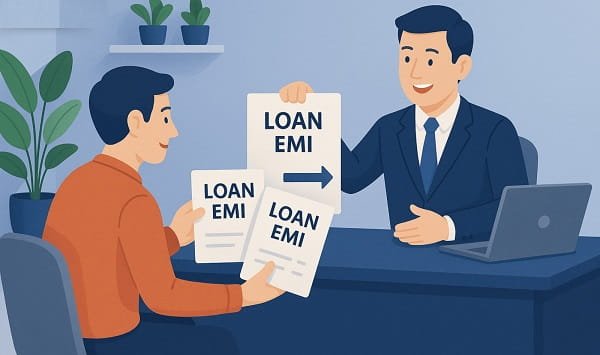
Debt consolidation is the process of replacing multiple existing debts with a single new loan — ideally at a lower interest rate, with a single EMI, and a structured repayment timeline that brings your total debt to zero.
The logic is straightforward: a credit card charging 36 to 42% per annum, a personal loan at 18 to 24%, and a BNPL facility at 24 to 30% — all running simultaneously — are collectively destroying your financial position faster than most income growth can keep pace with. Replacing all of them with a single loan at 12 to 15% reduces the interest burden, simplifies your repayment, and creates a defined end date for being debt-free.
What consolidation is not: a reduction of debt. The principal you owe doesn’t change. What changes is the cost of carrying it and the structure of repaying it. Confusing consolidation with forgiveness is the single most dangerous misconception people carry into the process.
Step 1: Map Every Debt You Carry
Before approaching any lender, create a complete inventory of every outstanding balance. For each debt, record:
- The lender and type of debt
- The outstanding principal
- The current interest rate
- The remaining tenure
- The monthly EMI or minimum payment
- Any prepayment penalty
Total the outstanding principal across all debts. Total the monthly payments. Calculate the weighted average interest rate — multiply each debt’s outstanding by its rate, sum them, divide by total outstanding. This is the number your consolidation loan must beat to make mathematical sense.
This exercise also surfaces something most people prefer not to face directly: the full scale of the problem. Seeing all the numbers in one place is uncomfortable. It is also the only way to make a rational decision.
Step 2: Choose the Right Consolidation Instrument
Not all consolidation routes are equal. The right one depends on what collateral you have, your credit score, and your lender relationships.
Personal loan for debt consolidation. The most accessible route for most borrowers. Several banks and NBFCs offer personal loans specifically for debt consolidation at interest rates ranging from 10.5 to 16% for borrowers with good credit scores (750 and above). The loan amount can be used to pay off all existing debts simultaneously. No collateral is required. The key: the personal loan rate must be meaningfully lower than your weighted average rate across existing debts — a 2 to 3% difference is the minimum threshold worth bothering with, after accounting for processing fees.
Loan against property. If you own a house or commercial property, a loan against property (LAP) can unlock significantly lower interest rates — typically 9 to 12% — against which you consolidate all unsecured debt. The risk is material: your property secures the loan. Default means losing the asset. This route is appropriate only when the debt burden is large enough and the savings are significant enough to justify putting an asset on the line.
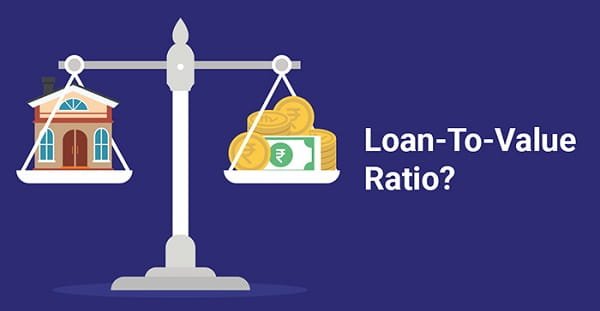
Top-up home loan. Existing home loan borrowers can access a top-up loan at rates close to their home loan rate — often 8.5 to 10.5% — to consolidate higher-cost debt. If your home loan is already established and your loan-to-value ratio has sufficient headroom, this is one of the cheapest consolidation routes available.
Balance transfer on credit cards. If the primary burden is credit card debt, a balance transfer to a card offering a 0% or low-rate introductory period of 6 to 12 months can provide breathing room. The trap: once the introductory period ends, the rate reverts to the standard 36 to 42%. Use balance transfers only if you are certain you can retire the balance within the promotional window.
Step 3: Run the Numbers Before Committing
Consolidation involves costs that must be factored in before the decision is made.
Processing fees on personal loans typically range from 1 to 3% of the loan amount. Prepayment penalties on existing loans — some carry foreclosure charges of 2 to 5% of outstanding — reduce the benefit of exiting early. Stamp duty on LAP or top-up home loans adds further friction.
The breakeven calculation: total interest saved over the new loan’s tenure must exceed total transaction costs of consolidation. If you are consolidating ₹10 lakhs of debt from an average 28% rate to a personal loan at 14% over 3 years, the interest saving is approximately ₹2.8 to ₹3.2 lakhs. If consolidation costs — processing fees, foreclosure charges — amount to ₹30,000 to ₹50,000, the net benefit is still substantial. Run this for your specific numbers before signing.
Step 4: Close the Original Debts Completely
Once the consolidation loan is disbursed, pay off every original debt in full — immediately. Do not leave partial balances running. Obtain a No Dues Certificate or closure letter from each lender. Verify with your credit bureau report after 30 to 45 days that all closed accounts reflect zero outstanding.
Leaving even one original account partially open defeats the entire exercise and reintroduces complexity and cost.
Step 5: Eliminate the Behaviour That Created the Debt
This is the step that separates people who use debt consolidation as a genuine turning point from those who repeat the cycle.
Within six months of consolidating, many people have repaid their credit cards and freed up credit limits — and spend them again. The consolidation loan is still running. They are now carrying the old debt plus new debt. The situation is worse than before.
Consolidation addresses the symptom — multiple expensive debts — not the cause. The cause is a spending and credit pattern that generates more outflows than income supports. Post-consolidation, the imperative is to reduce credit card limits, avoid fresh personal loans, and build a three to six month emergency fund so that the next unexpected expense doesn’t become the next debt.
FAQs
Q1. Will debt consolidation affect my credit score?
A: In the short term, applying for a new loan triggers a hard inquiry, which may dip your score marginally. Over the medium term, consolidation typically improves your score — lower credit utilisation on cards, fewer accounts with outstanding balances, and consistent repayment of the consolidation loan all contribute positively.
Q2. What credit score do I need to get a good consolidation loan rate?
A: A score of 750 and above typically qualifies for the best personal loan rates. Between 700 and 749, you may qualify but at higher rates. Below 700, lenders may decline or offer rates that don’t make consolidation worthwhile. Work on improving your score before applying if you fall below 700.
Q3. Can I consolidate student loans, home loans, and credit card debt together?
A: Practically, it depends on the consolidation instrument. Personal loans can retire any unsecured debt. LAP and top-up home loans can theoretically cover multiple debt types but are most efficient for large amounts. Consolidating a home loan into a higher-rate instrument makes no financial sense — home loan rates are already the lowest available. Never consolidate low-rate debt into a higher-rate instrument.
Q4. Is debt settlement the same as debt consolidation?
A: No. Debt settlement involves negotiating with lenders to accept less than the full outstanding amount, typically used in severe delinquency situations. It severely damages your credit score and has tax implications on the forgiven amount. Debt consolidation assumes you are current on payments and restructures debt without haircuts. They are different instruments for different financial situations.
Q5. How long does the consolidation process typically take?
A: For a personal loan, disbursement can happen within 2 to 7 working days with complete documentation. LAP takes longer — typically 2 to 4 weeks for property verification and legal due diligence. Top-up home loans vary by lender but generally process in 7 to 14 working days. Factor in time to receive closure letters from all retired lenders, which can take an additional 7 to 15 working days.
Consolidation buys you structure and a lower rate. What you do with the breathing room it creates determines whether it actually changes anything.







Leave a Reply